
Kitchen Sponge Bacteria: How to Keep Your Dish Sponge Clean
How much do you know about bacteria in kitchen sponges? Many people have heard that the kitchen sponge is one of the dirtiest items in the house. It may sound surprising, but it’s true.
According to microbiologist Philip Tierno from New York University School of Medicine, kitchen sponges can hold a huge amount of bacteria.
This happens because sponges are usually wet and full of food particles, which creates the perfect environment for bacteria to grow. When bacteria builds up in your sponge, it can spread germs to dishes, countertops, and even the food you prepare.
No one wants their family or guests getting sick from contaminated kitchen tools. That’s why it’s important to learn how to clean and maintain your dish sponge properly.
Below are some simple do’s and don’ts for keeping your kitchen sponge clean and safe.
Do Use a Microfiber Sponge
When it’s time to replace your old sponge, consider buying a microfiber sponge.
Microfiber sponges dry faster than regular cellulose sponges. Because they dry quickly, they don’t stay damp for long periods, which can help reduce bacterial growth.
The faster a sponge dries, the less time bacteria have to multiply.
Pro Tip:
Microfiber sponges are easy to find in grocery stores or online and they are usually affordable.
Do Clean Your Sponge Daily
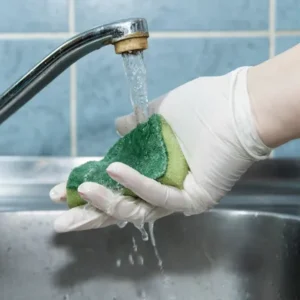
Cleaning your sponge every day helps reduce bacteria and keep your kitchen safer.
One simple way to disinfect a sponge is by using the microwave.
How to do it:
-
Completely wet the sponge.
-
Place it in the microwave.
-
Heat it for 1–2 minutes.
-
Let it cool before removing it.
You can also clean your sponge in the dishwasher along with your dishes if you use a heated drying cycle.
Do Rinse and Dry Your Sponge Properly
Bacteria grow quickly in moist and dirty environments.
To reduce bacteria growth:
-
Rinse your sponge thoroughly after each use
-
Squeeze out as much water as possible
-
Store it somewhere it can dry completely
A sponge rack or holder works well because it allows air to circulate around the sponge.
Avoid leaving the sponge sitting at the bottom of the sink, where it stays wet.
Don’t Use Sponges on Raw Meat Surfaces
Sponges should not be used to clean butcher blocks or cutting boards used for raw meat.
These surfaces often contain harmful bacteria from raw meat juices. Using a regular sponge on them can spread germs throughout your kitchen.
Instead, use:
-
Paper towels
-
Disinfectant wipes
-
A bleach cleaning solution recommended by the manufacturer
If a sponge touches raw meat juices, it’s best to throw it away immediately.
Don’t Keep Sponges for Too Long
If your sponge starts to smell bad, it’s a clear sign that bacteria are growing inside it.
Even if you clean your sponge regularly, it should still be replaced often.
General replacement guidelines:
-
Cellulose sponges: replace every 2 weeks
-
Microfiber sponges: replace every 3–4 weeks
Replacing your sponge regularly helps keep your kitchen cleaner and healthier.
Don’t Use Dish Cloths Instead of Sponges
Some people prefer using dish cloths instead of sponges, but this can also cause problems.
Dish cloths often stay wet longer, which allows bacteria to grow easily. Many people also forget to wash them frequently enough.
If you use a dish cloth instead of a sponge, make sure you wash or replace it every day.
Keep Your Kitchen Cleaner and Safer
The next time you pick up your kitchen sponge, think about when you last cleaned or replaced it.
By following these simple sponge cleaning tips, you can reduce bacteria, prevent food contamination, and maintain a healthier kitchen.
If you want even deeper cleaning and a spotless kitchen, the professionals at Alexandria Cleaners Pro are always ready to help. Their experienced team provides thorough home cleaning services that keep kitchens hygienic, fresh, and safe for your family.
Conclusion
Kitchen sponges may seem harmless, but they can hold large amounts of bacteria if not cleaned properly. With regular cleaning, proper drying, and frequent replacement, you can keep your sponge safe to use.
Good kitchen hygiene combined with professional cleaning from Alexandria Cleaners Pro can help maintain a clean, healthy, and fresh home environment.